
YESTERDAY
 IS STILL TODAY-



 I was born at the same date Modern Rock ‘n Roll began.
 Half human athlete,
  half acoustic


(with a little help from the Beatles and Buddy Holly) MUSIC STORE- **Special Jan. 27- Snowstorm ‘FROZEN in TIME’ Best new-old songs may be added to Store for music download: Song series originally created in 1976- 1985 and now may be or not be beautifully enhanced\/updated- Hearing is Believing!!! For example, (‘True) BIRDS FLY TOGETHER TOUCHING WINGS…” Why enhance? ‘BEST’ in Early Silver Beatles’ P.S. tried website test purchase- After I paid, song download link showed up on my computer screen and a few emails rec’d. too but arrived in my ‘Spam box’ instead of my primary inbox; so confirmed sender website and corrected putting the download link emails in my primary inbox if I don’t download songs before my spam box is emptied periodically. Apologies- in summer- fall store configuration wasn’t set up right on my websites- I should maybe add a few other payment methods too- Thanks & Love Bri
12‑Track Playlist — Black Blues Originals and the 1960s White Covers They Inspired
Below is a curated 12‑track playlist pairing the original recordings by Muddy Waters, John Lee Hooker, and Howlin’ Wolf with the notable 1960s white covers or artists who built on each song’s riff, groove, or vocal approach. Each entry includes a short note on why the pairing matters and how the cover translated the original into 1960s R&B/rock vocabulary.
-
“Mannish Boy” — Muddy Waters (original) → Rolling Stones (live covers) Note: A raw, call‑and‑response riff anthem; Stones adopted the swagger, riff emphasis, and frontman bravado that became central to their early identity.
-
“Rollin’ Stone” — Muddy Waters (original) → The Rolling Stones (name/influence) Note: Title and riff inspired the band’s name and early repertoire; the song’s riff‑first structure became a rock naming myth and template.
-
“Hoochie Coochie Man” — Muddy Waters (original) → Various British blues acts Note: Willie Dixon’s stop‑time riff and boastful lyrics provided a blueprint for riff‑driven rock songwriting and stage persona.
-
“Little Red Rooster” — Howlin’ Wolf (original) → The Rolling Stones (UK No.1 cover) Note: A direct cover that shows how a Wolf classic could be reworked into a mainstream British hit while retaining its blues core.
-
“Smokestack Lightnin’” — Howlin’ Wolf (original) → Blues‑rock adaptations (1960s bands) Note: Hypnotic, droning groove and vocal menace that influenced the pacing and mood of heavy blues‑rock performances.
-
“Spoonful” — Howlin’ Wolf (original) → Cream (cover) Note: Cream’s extended, heavy arrangement amplified Wolf’s dark lyricism into psychedelic blues‑rock territory.
-
“Boom Boom” — John Lee Hooker (original) → The Animals; garage bands (covers) Note: Hooker’s one‑chord groove translated easily into danceable rock covers and became a staple of 1960s R&B sets.
-
“Boogie Chillen’” — John Lee Hooker (original) → Garage and British blues groups Note: The primitive, driving boogie was a direct ancestor of many garage‑band rhythms and early rock riffs.
-
“Crawling King Snake” — John Lee Hooker (original) → The Doors; other rock acts (covers) Note: A blues standard whose spare groove and vocal phrasing were adapted into darker, rock‑oriented arrangements.
-
“Killing Floor” — Howlin’ Wolf (original) → Jimi Hendrix Experience; later blues‑rock acts (influence/covers) Note: The song’s aggressive riffing and tension influenced heavier electric guitar approaches in late‑60s rock.
-
“I’m a Man” — Bo Diddley / Muddy/Howlin’ Wolf repertoire (original roots) → British R&B bands (covers/adaptations) Note: The assertive, rhythmic vocal delivery and riff patterns in this family of songs fed into the swagger and rhythmic drive of many 1960s acts.
-
“One Bourbon, One Scotch, One Beer” — John Lee Hooker / original variants → George Thorogood; 1960s–70s rock adaptations Note: A narrative blues standard that later rock performers reworked into barroom rock staples, showing how blues storytelling migrated into rock performance.
Short listening guide
-
Start with the originals to hear the raw grooves, vocal power, and lyrical economy that made these songs adaptable.
-
Then listen to the covers to hear how 1960s artists amplified riffs, added rock instrumentation, and reframed vocal delivery for new audiences.
-
Pay attention to three transmission routes: recorded 78s/LPs, American Folk Blues Festival tours, and British musicians’ record collections — each helped move these songs from Black blues clubs into mainstream rock. April 1, 2026, Loving You, Bri Lane
There are moments in life when words are not enough, and yet silence feels too empty. That’s when a beautiful song can step in and quietly hold us together. Long before people talked about “music therapy,” listeners were already using songs to mend broken hearts, calm anxious minds, and make sense of their own story. If you look at artists like the Beatles or Buddy Holly and the Crickets, you can see how deeply healing music can be—and how simple it is to invite that same healing into your own daily life.
electric guitar, accordion, piano, pickup and microphone for Brain and Body! Rocket 88 Ike Turner and his Rhythm Kings stirring up a whole lotta SHAKIN’ GOING ON soon in Elvis the Human Pelvis and billions of Elvis Wanna Bes! Among my early memories is at about 2+, climbing way up on this enormous armchair- lying like a small 30-pound beanbag for hours on an arm of the chair between playtimes, listening to RACE RECORD PLAYING STATIONS BLASTING R&B, Country Rockabilly, Gospel-Soul and Rock n’ Roll! from the table beside the armchair! Authentic Performers and Music being played everywhere by all cultures at that time! By 20 years, IT WAS ALL OVER, almost no new authentic, honest original beats, rhythms and melodies- an endless tide of soulless pretender groups- music industry’s versions of frozen or tasteless artificial packaged Kraft Dinners pretending to be the new next big British Style Invasion, Dance, Sound!
Living at the periphery between listeners and players, I was there in L.A. enjoying the Bursting Youth Psychedelic Peace ‘n Love Music-Arts West Coast Scene in the Summer of UNLMITED DREAMS, LOVE and CREATIVE HORIZONS in ’67 and lived the music and cultural GARDEN in EDEN begin its collapse into the ’70’s! Every day, asked if I’d like to buy an original DOORS or other Group’s old Amplifier, etc. I’d squint- “Looks kinda scuffed up!” (Worth millions today- scuff marks especially loved- showing it was played at memorable concerts!!) Explored RAP in ’70’s but decided could this style catch a big wave- maybe NO! Ha! Played PUNK but wanted HAPPIER PUNK- PEACE ‘n LOVE PUNK?! Yeh, Right? By 15 years later, began to crash into multiple major mental health challenges- GLAM ROCK and Synthesized Muzak Samples of earlier songs putting me over the edge? With accompanying physically frightening heart stoppages and rallies- OMG!
But rode all the challenging waves like my surfin’ training, beat back all the shark infested waters and tides- emerged back again in the late ’50’s -dearly ’60’s feeling for that traffic wreck music collision between African American and White Music Scenes – my HEART BACK HOME AGAIN, riding good vibrations in my endless summer of ARTS, MUSIC and PEACE ‘n LOVE, right Ringo?!! Jan. 9’ 67- oops ’26 or is it, ’62 again? McCartney’s still touring like it’s ’62!!! P.S. Beloved Music Angel who Fell from MUSIC HEAVEN crashlanding on Frozen Earth, Superstar Buddy Holly (Buddy and the Crickets) playing ‘Heartbeat’ (Petty, Montgomery) spawned my Heartbeat/Heartbeatles theme reminding me of my heart stopping/starting by mental health challenges ‘kissing me’, also evoking moniker the Beatles by the Crickets!
***y YESTERDAY IS TODAY AGAIN- How to Use a Beautiful Song for Healing
(with a little help from the Beatles and Buddy Holly)
There are moments in life when words are not enough, and yet silence feels too empty. That’s when a beautiful song can step in and quietly hold us together. Long before people talked about “music therapy,” listeners were already using songs to mend broken hearts, calm anxious minds, and make sense of their own story. If you look at artists like the Beatles or Buddy Holly and the Crickets, you can see how deeply healing music can be—and how simple it is to invite that same healing into your own daily life.
Why certain songs feel like medicine
Not every song feels healing, even if it’s catchy. Healing songs tend to have a few simple qualities: emotional honesty, a memorable melody, and a sense of human connection. Think about a song like the Beatles’ “Let It Be.” The chords are simple, the lyrics are gentle, and the message is one of acceptance and quiet faith: “There will be an answer, let it be.” It doesn’t try to fix your life; it just keeps you company while you breathe through it.
Buddy Holly and the Crickets brought a different kind of healing. Their songs often held the bright, hopeful energy of young love and possibility—music you could dance to, cry to, or drive to with the windows down. Under the surface of the rock ’n’ roll beat, there’s a comforting reminder that life keeps moving, and so can you. Rhythm itself can be healing when your nervous system is jangled, a steady beat can give your body something to entrain to, like a heartbeat you can trust.
When you find a song that feels like “home,” your body often knows before your mind does. You might feel your shoulders drop, your breathing slow, or tears appear from nowhere. That’s healing at work.
Creating a small ritual with a song
One of the most powerful ways to use music for healing is to build a simple personal ritual around a single song. It doesn’t need to be dramatic or complicated. In fact, the more ordinary it is, the better it can slip into your daily life.
You might choose a Beatles song that always steadies you, or a Buddy Holly track that reminds you of resilience and lightness. Or you might choose a new piece of music that seems to hold your feelings without judgment. Once you’ve chosen the song, try this:
- Find a quiet place where you won’t be interrupted for three to five minutes.
- Put your phone on Do Not Disturb, except for the music player.
- Before you press play, set a clear intention: for example, “This is three minutes just to feel what I feel,” or “For this song, I give myself permission to rest.”
Then simply listen. No multitasking, no scrolling, no “shoulds.” Let the lyrics and melody move through you. If memories come up, let them come. If nothing special happens, that’s fine too. The healing is often in the simple act of giving yourself a protected time and space, with the song as your companion.
Listening with your whole body
Many people think of music as something they process with their ears and mind, but healing listening involves the whole body. When you listen to a song that touches you, notice what happens physically.
Do certain harmonies give you goosebumps, like the stacked vocals the Beatles were so famous for? Does a certain guitar tone—like Buddy Holly’s clean, bright Stratocaster sound—seem to vibrate in your chest? Do you feel your jaw unclench, or your hands soften?
Try putting one hand on your heart and one on your belly while you listen. Breathe slowly and let the song “massage” your inner space. You’re not analyzing the music; you’re letting it wash through you like warm water. This kind of embodied listening can ease tension and help you feel more grounded, even if you can’t explain why.
Letting lyrics speak for you
One of the secret powers of songs is that they say what we can’t always say ourselves. When Paul McCartney sings “When I find myself in times of trouble,” it gives your own “times of trouble” permission to exist. When Buddy Holly sings about longing or heartache, he’s giving shape and rhythm to feelings that otherwise might sit inside you as a vague heaviness.
You can deepen the healing effect by consciously using the lyrics. For example:
- Pick a line that really resonates with you and write it down in a journal.
- Underneath it, write a few sentences about what that line means in your own life right now.
- Let the song become a kind of mirror, reflecting something true that you needed help seeing.
In this way, you’re not just passively consuming music; you’re in a kind of quiet dialogue with it. The song speaks, you respond, and slowly a deeper understanding of your own feelings begins to emerge.
Returning to the same song over time
The Beatles’ music means different things to people depending on when they hear it in their lives. The same is true of Buddy Holly. A song you danced to as a teenager might become a kind of anchor during a difficult adult season. Healing with music isn’t just about one moment—it can be about returning to the same song many times and letting it travel with you through different chapters.
You might create a small playlist of “healing songs” that you return to often: perhaps a Beatles track that comforts you, a Buddy Holly song that lifts your energy, and a newer piece of music that feels like a gentle hand on your shoulder. Over time, your body starts to recognize these songs as signals of safety. When one of them comes on, your system knows, “I’m allowed to relax now.”
This is why certain songs can make us cry within seconds: they carry a whole history of previous times they helped us survive.
Let music be a companion, not a cure
It’s important to remember that music doesn’t have to “fix” you to be healing. The Beatles never promised that one song would solve your life; Buddy Holly didn’t claim a three‑minute track would erase grief. What they offered instead was presence—something honest, melodic, and human to share the road with you.
When you use music for healing, try to release the idea that you must feel “better” by the end of the song. Instead, ask a gentler question: “Do I feel more accompanied? Do I feel a little less alone in this moment?” If the answer is yes, the song has already done its work. WORDS of LOOVE-
 Tell Me How You Feel-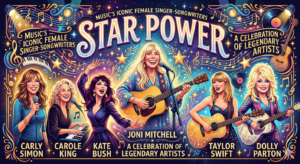
 ***LET IT BE-
  We Just Can’t, Paul! Jan. 10, ’26
What Makes “Let It Be” So Meaningful in the Lives of So Many?
Some songs arrive like visitors in our lives; others take up permanent residence. “Let It Be” by the Beatles is one of those rare songs that seems to move in and stay. Decades after it was written, people still turn to it in moments of grief, confusion, and change. What is it about this song that touches so many hearts, across ages and cultures, and keeps feeling relevant no matter what’s happening in the world?
A song born out of real struggle
Part of the power of “Let It Be” lies in where it came from. Paul McCartney has said that the song was inspired by a dream of his mother, Mary, who died when he was a teenager. In the dream, she appeared to him during a stressful period in his life, saying, “It will be all right, just let it be.” That origin matters, because we can feel the authenticity behind the words. This isn’t abstract philosophy; it’s a message of comfort from someone he loved and lost.
When listeners learn this backstory, the line “Mother Mary comes to me, speaking words of wisdom, let it be” takes on an intimate, human quality. Even if we interpret “Mother Mary” in a spiritual or religious sense, we can still hear the voice of someone kind and wise, stepping into our troubled minds with a simple, soothing instruction. The song carries the emotional weight of a real family story, and that makes its comfort feel earned, not manufactured.
Simple words for complicated feelings
Another reason “Let It Be” is so meaningful is its language. The lyrics are incredibly simple. There are no clever metaphors or dense poetic twists. Lines like “When I find myself in times of trouble” and “In my hour of darkness” speak in straightforward, everyday words. Ironically, this simplicity is what makes the song able to hold complicated feelings.
People rarely think in poetry when they’re really suffering; their inner voice sounds more like, “I’m overwhelmed” or “I don’t know what to do.” The language of “Let It Be” mirrors that. It doesn’t judge or lecture; it just acknowledges the difficulty: there is trouble, there is darkness, there is broken heartedness in the world. By not rushing too quickly to a “solution,” the song validates the listener’s experience first.
Then, the refrain “Let it be” offers a gentle shift—not a command to fight, fix, or escape, but an invitation to soften around what is happening. For many people, that’s exactly what they need: permission to stop struggling for a moment and simply breathe.
A melody that feels like a blessing
If the lyrics are the mind of the song, the melody is its heart. “Let It Be” uses a simple, hymn‑like melodic line that’s easy to remember and easy to sing along with. It doesn’t show off. Instead, it moves in a stepwise, reassuring way, almost like someone walking beside you at a calm, steady pace.
The chorus lifts slightly higher than the verse, giving a sense of rising above the trouble for a moment. The phrase “Let it be” repeats, but never in a harsh or demanding way; it feels more like a soothing mantra. Many listeners describe feeling their shoulders relax or their breathing slow when the chorus comes back around. It has the shape of a blessing: it rises, opens, and settles gently, leaving behind a sense of acceptance and peace.
This melodic simplicity also means the song can be covered in many styles—piano, guitar, choirs, even solo voices in quiet rooms—and still retain its emotional effect. That flexibility has helped it travel across generations and musical tastes.
Harmony that balances sorrow and hope
Harmonically, “Let It Be” walks a delicate line between sadness and optimism. The chords are mostly straightforward, but there’s a subtle blend of major and minor flavors that keeps the song from feeling either too dark or too cheerful. This balance is important. If the song were purely major and upbeat, it might feel like it was minimizing the listener’s pain. If it were all minor and gloomy, it might deepen despair instead of easing it.
Instead, the harmony feels like a voice that can sit with your sadness while still believing in light. When the chorus arrives, the music leans toward a more resolved, major sound, giving the sense that even though life is complicated, there’s a deeper stability underneath. For listeners, this creates a feeling that “Yes, things are hard, but I’m held by something steady.”
Acceptance without giving up
The phrase “let it be” can be misunderstood as passivity or surrender in a negative sense, but the song doesn’t carry that energy. It doesn’t say “give up” or “stop caring.” It suggests something more subtle: allowing what we cannot control, while trusting that some kind of answer or meaning will emerge in its own time. “There will be an answer, let it be” is not a promise that everything will instantly improve; it is a reminder that life is larger than our current confusion.
This nuance is why so many people turn to the song in times of grief, illness, or major transition. It doesn’t try to convince them that everything is fine when it clearly isn’t. Instead, it offers a way to live inside the not‑knowing. For many, that’s deeply healing: being allowed to lean into acceptance, without losing hope.
A shared song for private pain
“Let It Be” is also meaningful because it operates on two levels at once: it feels intensely personal, yet it has become a communal anthem. People play it at funerals, memorials, and vigils; they sing it alone in their cars or while washing dishes at the end of a hard day. Each listener brings their own story—lost parents, broken relationships, health struggles, world events—and the song seems to make space for all of it.
When a song like this is shared, it quietly tells us, “You’re not the only one who feels this.” Knowing that millions of others have wept or found comfort to the same melody creates a sense of invisible community. We may never meet those people, but we’re connected through this piece of music. That shared experience can make our own burdens feel a little lighter.
A companion that grows with us
Over time, “Let It Be” can become a kind of lifelong companion. Someone might first hear it as a teenager and feel it as a gentle reassurance. Later, in midlife, it may take on new depth when they face loss or burnout. In old age, the song can become almost like a wise old friend, reminding them to trust the flow of life, even as their own story approaches its closing chapters.
The song doesn’t change, but we do, and as we change, different lines and moments in the music speak to us in new ways. That evolving relationship is a hallmark of a truly meaningful song. It doesn’t lock us into one fixed emotion; it meets us wherever we are and offers a slightly different kind of comfort each time.
> When I listen to “Let It Be,” I hear more than a classic Beatles song. I hear a quiet invitation to breathe, to soften my grip on what I can’t control, and to trust that some deeper wisdom is at work, even when I can’t see it. That’s why, all these years later, the song still feels like a friend I can turn to whenever I need a little musical healing.
If you’d like-
“Stability and peace are not built with mutual threats, nor with weapons, which sow destruction, pain, and death, but only through a reasonable, authentic, and responsible dialogue,” Pope Leo said.
The Pope warned of an immense tragedy if violence escalates out of control.
“Faced with the possibility of a tragedy of enormous proportions,” he said, “I address to the parties involved a heartfelt appeal to assume the moral responsibility to stop the spiral of violence before it becomes an irreparable abyss!”
Pope Leo prayed that nations may return to dialogue in order to seek peace.
“May diplomacy recover its role and may the good of peoples be promoted, peoples who long for peaceful coexistence founded on justice,” he said. “And let us continue to pray for peace.” March 26
- Populist Strongman Appeal: Like Mussolini and Hitler, Trump has been accused of using inflammatory language to rally supporters against perceived enemies. Historian Anne Applebaum notes that Trump “speaks like Hitler, Stalin, Mussolini,” employing phrases such as “enemies of the people” to discredit the media—a tactic echoed by Stalin and Mao, who used it to justify purges and suppress dissent.
Putin and Xi Jinping, modern autocrats, similarly manipulate narratives to consolidate power without overt violence, focusing on information control—Trump’s attacks on the press and “fake news” align here.
- Admiration for Authoritarians: Trump has praised figures like Putin (“smart”), Xi (“controls 1.4 billion people with an iron fist”), and others, raising alarms about emulating their unchecked rule.
This mirrors how early dictators like Mussolini admired predecessors (e.g., Lenin) while building cults of personality. Stalin and Mao, paranoid leaders, purged rivals; Trump’s calls to “lock up” opponents (e.g., during 2016 rallies) evoke this, though without the executions.
- Manipulation Over Violence: Modern autocrats like Putin avoid Stalin-era mass killings, opting for legal harassment and media control—Trump’s defiance of court rulings and pressure on institutions (e.g., universities, NATO) fits this pattern.
On X (formerly Twitter), users debate these links, with some calling Trump “Hitler 2.0” for policies like mass deportations, while others defend him as “an angel compared to Hitler.”Key Differences - Institutional Constraints: Unlike Hitler (who suspended the Weimar Constitution) or Stalin (who ruled via terror), Trump operates within U.S. checks and balances. Courts have blocked many actions (e.g., Supreme Court rulings on due process for immigrants), and he hasn’t dismantled elections or Congress.
Mao and Lenin led revolutions; Trump was elected twice in a democratic system
- Scale of Atrocities: Dictators like Hitler (Holocaust), Stalin (Gulags), and Mao (Great Leap Forward famine) caused millions of deaths through genocide and starvation. Trump’s policies, while criticized (e.g., family separations at the border), don’t approach this—critics argue they’re authoritarian precursors, but not equivalents.
- Psychological and Historical Context: Early lives of dictators show patterns of isolation and radicalization (e.g., young Hitler as a failed artist, Stalin adopting revolutionary aliases). Trump’s background as a businessman-turned-politician lacks this extremism, though some see narcissism in his “biblical moment” self-view.
As one analyst notes, Trump is a “litmus test” for democracy; failure to reform could lead to more extreme figures.
Does Trump Abide by Laws, Congress, Due Process, and the Constitution? Allegations claim Trump ignores constraints. Evidence shows challenges to norms, but not total disregard—often through executive actions and rhetoric. Evidence of Non-Compliance
- Due Process and Constitution: In a 2025 interview, Trump said “I don’t know” if he must uphold constitutional due process for all, questioning Fifth and Fourteenth Amendment rights for non-citizens.
He invoked the 1798 Alien Enemies Act for deportations without hearings, bypassing immigration courts—a move critics call unconstitutional, as the Act requires wartime conditions.The Supreme Court has affirmed due process for immigrants.supremecourt.gov
- Congress and Legal Constraints: Over 150 executive orders in early 2025 override statutes (e.g., halting congressionally approved funds, reclassifying civil servants as political appointees
This includes trashing treaties and alliances, defying congressional oversight. - International Laws: Trump dismissed international law (“I don’t need international law”) amid policies like abducting foreign leaders, echoing autocratic disregard.
On X, posts highlight ICE actions as “Trump’s SA” (brownshirts), suggesting Gestapo-like tactics
- Legal experts note immigrants’ rights vary by status, but the Constitution mandates basic due process for all.
Trump’s actions face court challenges, showing system resilience.He hasn’t suspended the Constitution outright.
- Exile as Punishment: Napoleon was exiled to Elba (1814) and later St. Helena to neutralize him without execution.
Other leaders (e.g., Bolsonaro self-exiled) fled justice. In ancient Rome, exile spared capital punishment.
- In Modern Contexts: No U.S. precedent—America rejects exile, favoring trials (e.g., no presidents imprisoned or exiled post-term).
Trump’s own exile threats for “repeat offenders” highlight hypocrisy after Jan. 6 pardons.
- Legal Barriers: Seizing a president violates due process and the Constitution—impeachment or elections are remedies. Exile isn’t a U.S. punishment; it would undermine rule of law.
- **”Should” He? No—such actions mimic the dictatorships criticized. Democratic accountability (e.g., courts, midterms) is preferable. As one observer notes, Trump in “exile” could still threaten democracy via influence.
Pursuing justice through legal means (e.g., investigations) aligns with American values.
- Trump’s language (e.g., dehumanizing immigrants as “vermin” or “poisoning the blood”) echoes Hitler, Stalin, and Mussolini’s tactics to rally bases against “enemies.” Historian Anne Applebaum highlighted this in 2024–2025 analyses, noting deliberate dehumanization and calls for violence akin to fascist leaders.
Similar views appear in expert commentary linking Trump’s style to Mussolini’s populism and Hitler’s early rhetoric.
On X, users draw direct lines, with some labeling ICE tactics as “Trump’s SA” (referencing Nazi brownshirts). - Trump has praised Putin, Xi, and others for “strong” leadership, aligning with how dictators like Mussolini admired predecessors while building cults of personality.
Parallels to modern autocrats (Putin, Orbán, Erdoğan) are common, with Trump seen as following a “Dictator’s Playbook” of undermining democracy, rule of law, and dissent. - Project 2025’s executive strengthening draws “striking” similarities to Mussolini’s repressive laws, per historian Ruth Ben-Ghiat.
In 2025, Yale fascism experts fled to Canada, citing U.S. descent into authoritarianism under Trump.
- Unlike Hitler (who suspended Weimar’s constitution) or Stalin (who used terror for purges), Trump hasn’t fully dismantled elections or Congress. Courts repeatedly block actions (e.g., Supreme Court rulings on due process).
- Atrocities scale: No equivalent to the Holocaust, Gulags, or Great Leap Forward famine. Trump’s policies face legal pushback without mass executions.
- Psychological context: Dictators often had traumatic upbringings fueling paranoia; Trump’s businessman background lacks this radicalization, though narcissism critiques persist.
- Due Process/Constitution: Trump invoked the 1798 Alien Enemies Act for rapid deportations (e.g., Venezuelans to El Salvador’s CECOT prison) without hearings, bypassing immigration norms. Supreme Court rulings (e.g., 2025 decisions in Trump v. J.G.G.) repeatedly affirmed due process rights for immigrants, blocking or pausing removals and requiring notice/review. Lower courts (e.g., Judge Boasberg) ruled violations occurred.
Trump questioned Fifth/Fourteenth Amendment applicability to non-citizens in interviews. - Congress/Legal Constraints: Over 200 executive orders by late 2025 (more than first term), including reclassifying civil servants, halting funds, and overriding statutes. Attempts to fire independent agency heads or impound funds violate laws like the Impoundment Control Act.
Firings of inspectors general ignored 30-day notice requirements. - International Laws: Trump stated “I don’t need international law,” with power limited only by “my own morality.” Executive orders withdrew U.S. from dozens of treaties/organizations (e.g., UNFCCC, IPCC). Actions like Venezuela operations (seizing Maduro, oil tankers) disregarded norms against force/use of territory.
- Courts enforce limits: Supreme Court emphasized notice/time for challenges under Alien Enemies Act; many orders face lawsuits under APA or Constitution.
- No outright suspension of Constitution; actions occur within (contested) executive authority, not revolution.
- Exile used historically (e.g., Napoleon) to neutralize threats without execution, but rare for elected leaders.
- No U.S. cases of presidential exile; accountability via impeachment/elections.
- Seizure violates due process/Constitution; impeachment (attempted in 2025 resolutions) or elections are remedies.
- Exile threats (e.g., for “repeat offenders”) highlight irony post-Jan. 6 pardons.
- Pursuing via legal/institutional means (courts, midterms) aligns with democracy; extralegal action risks mimicking criticized authoritarianism.
Hi, this is a comment.
To get started with moderating, editing, and deleting comments, please visit the Comments screen in the dashboard.
Commenter avatars come from Gravatar.